
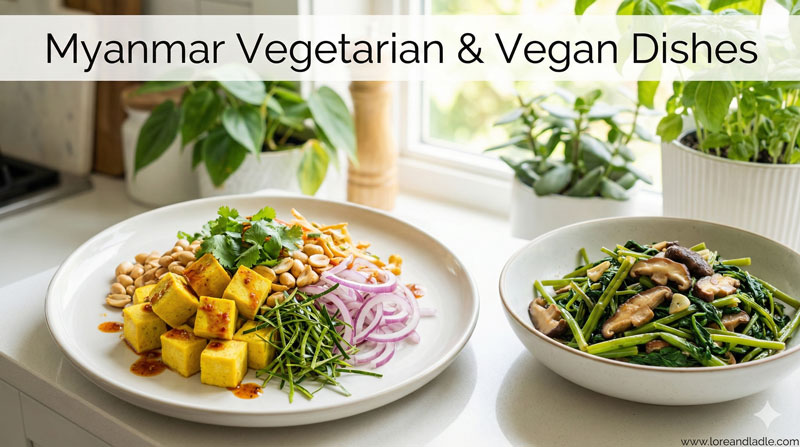
Introduction: The beauty of Myanmar vegetarian and vegan dishes
This is a journey into the heart of Myanmar’s food culture. Classic vs modern takes on Myanmar vegetarian and vegan dishes reveal how a country nourishes body and spirit through plants. The dishes honor everyday ingredients—rice, greens, pulses, tofu, and fresh aromatics—while inviting thoughtful twists. The result is a vibrant dialogue between time-honored flavors and contemporary plant-based creativity. This post celebrates that conversation, focusing on cultural value and culinary significance above all.
Classic foundations: What makes Myanmar vegetarian cuisine enduring
Classic Myanmar dishes build flavor with restraint and balance. Rice serves as the foundation, providing texture and comfort. Legumes and pulses bring protein and heartiness. Fresh greens, herbs, and crunchy toppings introduce brightness and contrast. A common thread is simmered or lightly seasoned preparations that let the natural sweetness of vegetables shine through. Traditional leaf salads, such as lahpet thoke, showcase fermentation, sesame, peanuts, garlic, and chilies in harmony. When prepared with care, these dishes feel timeless and communal, inviting people to share a table and a moment of calm.
Culinary significance here rests in accessibility and seasonality. Ingredients appear in markets with reliable rhythm: a basket of greens, a bag of dried chickpeas, a block of tofu, a jar of coconut milk. Recipes adapt to village kitchens and city kitchens alike, yet they retain a quiet elegance. The classic approach respects vegetable textures and natural flavors, allowing each bite to tell a story of the land and the hands that prepared it.
Modern takes: Plant-based innovation shaping today’s table
Modern interpretations expand what vegetarian and vegan dishes can be. Chefs honor traditional flavors while embracing plant-forward creativity. Tofu and mushrooms replace heavier elements, coconut milk enriches curries with a velvety depth, and seasonal vegetables take center stage in bright, peppery stir-fries. Fermented ingredients, known for their umami, show up with clever precision, enhancing depth without overpowering freshness.
These contemporary versions remain anchored in Myanmar’s pantry. Ginger, garlic, shallots, lime, and coriander continue to guide the flavor profile. Yet chefs experiment with textures—crisp toppings, smooth curries, and layered sauces—to offer new experiences without losing the soul of the cuisine. In kitchens across the country, modern takes demonstrate how plant-based dishes can be both comforting and exciting, inviting diners to explore and discover.
Techniques and flavor bridges: From tradition to innovation
A key bridge between classic and modern methods is technique. Slow, gentle simmering preserves vegetable integrity in traditional dishes. Quick tempering with hot oil releases aromatics and adds a lively finish in newer interpretations. Balancing salt, sour, heat, and fat remains essential in both realms. The result is harmony: a plate that feels grounded yet fresh, familiar yet exploratory.
Texture also plays a decisive role. Classic recipes favor succulence and tenderness, while modern plates emphasize contrast—crisp greens beside creamy coconut curry, or a chewy tofu bite with a bright herb swath. The careful use of herbs, such as cilantro and dill in some regions, adds fragrance that lingers pleasantly after the last bite. In both styles, mindful seasoning brings out the best in vegetables and legumes.
Cultural value: meals as a thread through daily life
Myanmar vegetarian and vegan dishes illuminate daily life through shared meals. Families gather to eat together, passing bowls and stories from one generation to the next. Markets bustle with color and scent, where cooks select fresh leaves, beans, and spices for the day’s dishes. Food becomes memory—an everyday ritual that strengthens connections and fosters hospitality.
Vegetarian and vegan options also reflect care for health and sustainability. Plant-based meals demonstrate balance, offering nourishment without heaviness. The growing interest in plant-forward cooking shows modern communities valuing fresh ingredients, precise flavors, and thoughtful dining experiences. Across regions, the dishes tell a story of place, family, and craft—an enduring cultural thread that connects past and present.
Practical notes: exploring at home and on the table
To experience this cuisine at Home, start with simple vegetables, rice, and a few pantry staples like tofu, chickpeas, coconut milk, garlic, and lime. Build a dish with a clear center ingredient—perhaps a tofu and greens curry or a bright lahpet-inspired salad with sesame and peanuts. Use fresh herbs to brighten the plate and finish with a crisp topping for texture.
When possible, source ingredients locally and season with care. Taste as you go, adjusting salt and acidity to keep the vegetables’ natural sweetness forward. A well-made Myanmar vegetarian or vegan Dish Is approachable, satisfying, and deeply satisfying in its clarity.
Conclusion: A celebration of flavor, culture, and craft
Classic and modern takes on Myanmar vegetarian and vegan dishes offer a rich portrait of culinary culture. They honor the land’s ingredients, celebrate shared meals, and invite ongoing experimentation. Whether you prefer traditional comforts or contemporary twists, the dishes invite respect for craft and curiosity about flavor. In every bite, the beauty of Myanmar’s plant-based cooking shines: a warm invitation to slow down, savor, and connect.