
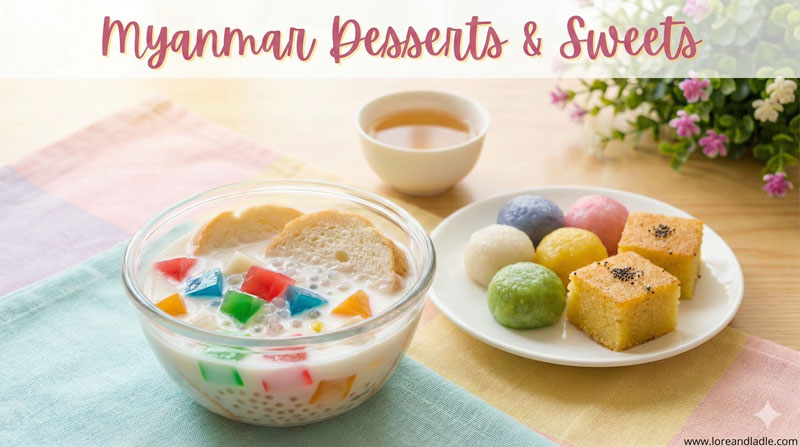
Restaurant-Style Myanmar Desserts & Sweets You Can Make at Home
Introduction: A warm invitation to Myanmar dessert culture
Myanmar desserts carry a gentle poetry of flavor, texture, and color. They emerge from the everyday rhythms of life—tea time, family gatherings, and joyful celebrations. These sweets showcase harmony between creamy coconut milk, nutty sesame, fragrant pandan, and the soft chew of glutinous rice. They arrive in bite-sized portions that invite sharing and conversation. This post explores the cultural value and culinary significance of restaurant-style Myanmar desserts you can recreate at home. The goal is to honor the artistry behind each dish while making the technique accessible for Home Cooks.
The cultural value of Myanmar desserts
Desserts in Myanmar are more than a sweet finish. They are a bridge between seasons, regions, and families. Each region favors certain ingredients—for example, coconut, palm sugar, sesame, and rice-based pastes appear across many recipes. The act of preparing a dessert signals care and hospitality. Platter presentation matters too: desserts are often arranged with bright colors and delicate textures, inviting guests to linger a little longer at the table. In many households, making a dessert is a way to welcome guests, celebrate a small success, or mark a seasonal change. The practice teaches balance—between sweet and light, between dense and refreshing—and reveals how technique can elevate a simple ingredient into a memorable bite. When you prepare these dishes at home, you join a long lineage of cooks who have refined flavors, sharpened textures, and layered aromas with patience and pride. The result is a shared experience that honors flavor and friendship.
Core ingredients that define the cuisine
Myanmar desserts rely on a few dependable stars. Coconut milk provides creaminess and a tropical aroma. Palm sugar lends a deep, caramel-like sweetness that pairs beautifully with rice and sesame. Glutinous rice and rice flour offer a soft, chewy texture that many mont and dessert bites rely on. Tapioca pearls and sago add pleasant bite and burst of starch. Sesame seeds bring nutty warmth, and pandan or other fragrant greens contribute a gentle, citrusy aroma. Fresh fruit, especially mango or jackfruit when in season, adds brightness. This mix of ingredients creates a versatile palette that you can mix and match to craft restaurant-style desserts at home.
Techniques that lift home desserts to restaurant quality
To capture restaurant-style finesse, focus on balance, temperature, and presentation:
- Texture layering: alternate creamy elements with chewy or crisp pieces to create a satisfying mouthfeel.
- Syrup construction: a well-made syrup should be glossy, fragrant, and just sweet enough to complement the base.
- Proper setting: jellies and custards benefit from precise cooling times and gentle handling to avoid cloudiness or graininess.
- Finishing touches: a light dusting of sesame, a drizzle of coconut milk, or a few mint leaves can elevate the final plate.
- Temperature contrasts: serve some elements chilled and others warm to awaken different flavor notes.
These practices help home cooks achieve a restaurant-like finish while staying true to traditional flavors.
Signature textures and flavor harmony
Myanmar desserts often pursue a balance of creamy, chewy, and crisp textures. Think of silky coconut milk contrasting with soft dumplings, then a spark of sesame crunch. The sweetness tends to be gentle and round, never overpowering the natural flavors of the ingredients. Fragrant notes from pandan, coconut, and ginger syrup weave through the dishes, offering a comforting aroma that invites you back for another bite. When you plate these sweets, aim for harmony: the eye should see a bright color, the nose should greet a gentle aroma, and the palate should sense a clean, satisfying finish.
Serving ideas and cultural moments
These desserts pair beautifully with Myanmar tea, sesame snacks, or fresh fruit. They work well as a light end to a meal or as a centerpiece in a mid-afternoon tea break. Consider serving a small assortment on a shared platter, allowing guests to mix and match textures. Colorful jelly pieces, white creamy ribbons, and golden-brown sesame shards create an inviting display. In family gatherings, presenting a well-arranged dessert tray becomes a small ceremony of hospitality, signaling warmth and welcome to everyone at the table.
Getting started at home: approachable ideas and simple recipes
Here are three approachable concepts you can begin with. Each is designed to be straightforward, delicious, and faithful to Myanmar dessert sensibilities. Use them as a starting point to craft your own restaurant-inspired variants.
- Mont Lin Ma Yar-inspired Glutinous Rice Dumplings in Ginger Syrup
- Ingredients: glutinous rice flour, warm water, a small amount of rice flour for dusting, fresh ginger slices, palm sugar or brown sugar, water.
- Method: Mix glutinous rice flour with enough water to form a smooth dough. Roll small balls. Simmer sliced ginger in water with sugar to make a fragrant syrup. Boil the dumplings briefly until they float, then simmer them in the ginger syrup until glossy. Serve warm, with a light drizzle of cooled syrup.
-
Tip: Dust the work surface lightly with rice flour to prevent sticking.
-
Coconut Milk Jelly with Tapioca Pearls
- Ingredients: coconut milk, sugar, agar-agar or gelatin (vegetarian option), small tapioca pearls, a pinch of salt.
- Method: Dissolve agar-agar in coconut milk with sugar and salt over gentle heat. Add pre-cooked tapioca pearls. Pour into molds and chill until set. Serve in small cubes or slices with a mint leaf for color.
-
Tip: Stir gently to avoid foaming; cool slowly to keep the jelly clear and smooth.
-
Sesame Brittle with Palm Sugar
- Ingredients: palm sugar, water, sesame seeds, a pinch of salt.
- Method: Melt palm sugar with a small amount of water to a thin caramel. Stir in sesame seeds and a trace of salt. Pour onto a lightly oiled surface and spread thinly. Let cool, then break into shards.
- Tip: Use a parchment-lined tray and a spatula to spread evenly for uniform pieces.
Choosing a mindful approach for the kitchen
- Start with one dessert at a time. Master the base technique, then add variations.
- Use fresh ingredients where possible. The natural flavors shine with minimal interference.
- Present with care. A neat plate is as inviting as a tasty bite.
Conclusion: Embracing the sweet side of Myanmar cuisine
Restaurant-style Myanmar desserts you can make at home offer a doorway into a rich culinary tradition. They celebrate simple ingredients presented with thoughtful technique, allowing you to share a taste of Myanmar with friends and family. By exploring these desserts, you honor the artistry that turns everyday pantry staples into moments of delight. May your kitchen become a small stage where texture, aroma, and color come together in harmony, inviting warmth, conversation, and joyful tasting.
If you’d like, I can tailor a step-by-step plan for a week of Myanmar-inspired desserts, or create customized at-home recipes that fit your pantry and equipment.