
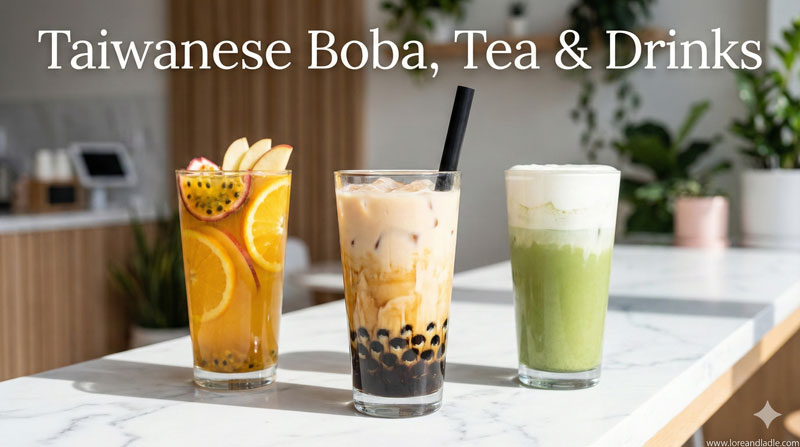
Best Taiwanese Boba And Tea Drinks Favorites That Bring Taiwan’s Flavors to Your Kitchen
This collection celebrates a beloved part of Taiwan’s culinary tapestry. Each drink blends tea clarity with playful textures, inviting you to savor Taiwan’s flavors in your own kitchen.
Introduction
Taiwanese boba and tea drinks fuse artisan tea craft with joyful texture. The result is a menu of beverages that feel both comforting and fresh. In homes and small cafés, these drinks encourage slow sipping and playful experimentation. The experience centers on balance: a well-brewed tea, a chewy pearl, and the right touch of sweetness. By recreating these drinks at home, you invite Taiwan’s daily rituals into your kitchen and honor a shared love for flavor, craft, and community.
The heart of Taiwan’s tea culture
Tea is more than a drink in Taiwan; it’s a daily ritual and a social moment. From bustling tea houses to quiet kitchen corners, people gather to compare aromas, adjust sweetness, and celebrate seasonal ingredients. The beauty lies in attention to detail: selecting fragrant teas, controlling brew strength, and timing pearls for the perfect bite. This care gives each glass a sense of place and memory. When you make boba tea at home, you participate in a tradition that values patience, balance, and warmth.
Core ingredients and technique
- Tea base: Black, green, oolong, or a blended tea forms the foundation. The tea should be vibrant and clear, not flat.
- Tapioca pearls: Chewy pearls provide the signature texture. They’re typically simmered until tender, then soaked in a light syrup.
- Sweeteners: Simple sugar syrups or brown sugar add depth without overpowering the tea.
- Dairy or non-dairy options: Milk, your favorite milk alternative, or a creamy non-dairy blend gives body and smoothness.
- Flavor accents: Fresh fruit syrups, coconut, taro, matcha, or jasmine can highlight local ingredients and seasonal notes.
to Make the drink shine, brew tea strong enough to stand up to milk and pearls, then cool it so flavors stay bright. Pearls should be tender but not mushy, and syrup should lightly coat them to keep the texture lively.
Popular favorites and flavor profiles
- Classic Milk Tea: Strong tea with milk and a gentle sweetness. It’s the comfort drink that anchors the menu.
- Brown Sugar Boba Milk: A caramel-like syrup coats warm pearls for a rich, toasty note.
- Taro Milk Tea: A creamy, pale purple drink with a sweet, nutty finish that feels nostalgic.
- Matcha Boba: Ground green tea delivers grassy depth, complemented by creamy milk and subtle sweetness.
- Mango Green Tea with Boba: Bright mango pairs with lightly brewed green tea and chewy pearls for a refreshing finish.
- Coconut Cream Tea: A tropical twist with coconut milk and a hint of vanilla.
- Strawberry Oolong: Fragrant oolong with bright fruit notes and a gentle sweetness.
- Almond Tea Latte: A nutty accent that smooths into a mild-tinged, comforting milk tea.
Each profile reflects a facet of Taiwan’s pantry—tea leaves, natural sweetness, and textures that invite lingering in the sip. When you select ingredients with intention, you create drinks that feel both familiar and new, a delicious bridge between home kitchens and Taiwanese flavors.
Making boba tea at home: a practical guide
- Start with a clean setup: have tea, pearls, syrup, and a timer ready.
- Brew tea confidently: use water near boiling for black and oolong, slightly cooler for green; then let it cool.
- Prepare pearls well: simmer until they are tender with a gentle chew, then rinse and coat in syrup to preserve moisture.
- Assemble with balance: tea, pearls, ice, and milk or a dairy-free option. Adjust sweetness to taste.
- Finish with flair: a drizzle of syrup or a small swirl of condensed milk can elevate the drink subtly.
Tips for success: taste as you go, keep equipment clean, and avoid over-soaking pearls. Freshly brewed tea and properly prepared pearls make a noticeable difference in texture and aroma.
The sensory experience: texture, aroma, color
Texture defines these drinks. The pearl’s chewiness contrasts with the smooth tea and cream. Aroma comes from fragrant teas and any added aromatics like jasmine or coconut. Color tells a story—from deep amber milk tea to pale taro or emerald matcha. Together, texture, scent, and hue create a multi-sensory moment that celebrates Taiwan’s tea artistry.
Pairings and occasions
These drinks pair beautifully with light snacks such as fruit, tofu-based bites, or crisp pastries. They’re ideal for casual afternoons, study breaks, or small get-togethers where conversation flows as easily as the beverages. A simple pairing enhances the flavor experience, while sharing the drinks invites a sense of hospitality and warmth.
Preservation of flavor and freshness
To keep flavor vibrant, store tea fresh and brew in small batches. Pearls stay best when prepared just before serving. If you must advance preparation, keep components separate and mix just before enjoyment. Remember, texture fades with time, so serving fresh preserves the intended bite and balance.
A note on hospitality and the joy of sharing
Preparing boba tea at home encourages a slow, generous sharing of flavors. It invites guests to observe, participate, and customize. This practice reflects a spirit of welcoming and curiosity—an everyday way to celebrate Taiwan’s culinary craft in a personal setting.
Conclusion
Best Taiwanese Boba And Tea Drinks Favorites bring Taiwan’s flavors into your kitchen with warmth and texture. The combination of thoughtful tea, chewy pearls, and gentle sweetness creates a comforting and memorable experience. By embracing these drinks, you honor a rich culinary tradition and invite seasonal, fresh flavors into your home. Enjoy the ritual, savor the aroma, and share the moment with friends and family.