
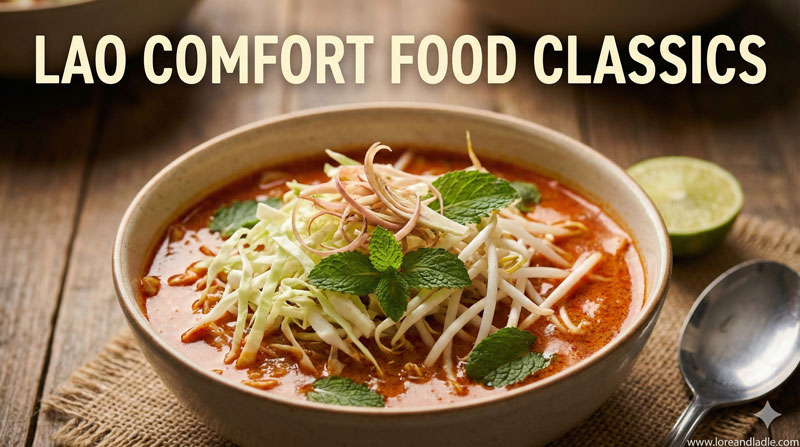
Introducing the dish “Ultimate List of Lao Comfort Food Classics to Explore in the U.S.” is an invitation to savor culture through cuisine. This is more than a menu; it is a cross-country journey into Lao comfort foods that center on warmth, balance, and home-like hospitality. The collection highlights flavors, textures, and techniques that have nourished families and friends for generations. It celebrates care in the kitchen and the pleasure of sharing. The dish stands as a quiet tribute to Lao culinary value and the way food shapes belonging and memory.
The Heart of Lao Comfort: An Introduction
Lao comfort food rests on simplicity done with skill. The backbone is community, seasonality, and a respect for ingredients. Each dish in the list brings a story of careful preparation and thoughtful seasoning. In the United States, these dishes offer a doorway to Lao food culture for curious eaters. The result is a comforting, fresh, and inviting dining experience that feels both timeless and modern.
Sticky Rice: The Silent Center of Lao Meals
Sticky rice anchors Lao meals with its supple texture and subtle sweetness. It becomes a utensil, a partner, and a shared bowl of warmth. In classic meals, you’ll scoop, press, and wrap bites of meat, herbs, and sauce inside soft grains. The technique of pounding or steaming the rice is a quiet act of care. This staple ties flavors together and invites communal eating.
Larb and Fresh Herbs: A Conversation of Flavors
Larb is a bright, aromatic dish of minced meat, lime, mint, cilantro, and toasted rice powder. It speaks of balance: sour, salty, spicy, and herbal notes all intertwined. You pair larb with sticky rice to amplify texture and aroma. The result is a lively plate that awakens the palate and invites conversation. The dish embodies precision and freshness in every bite.
Tam Mak Hoong: Bright, Refreshing, and Layered
Tam Mak Hoong, or green papaya salad, offers crispness and a sparkling zing. Shredded green papaya shimmers with lime juice, fish sauce, chili, and a hint of palm sugar. Crunch comes from peanuts or toasted seeds, adding depth. The dish embodies contrast—hot and cool, sweet and sour—creating a refreshing counterpoint to richer bites. It is a bright centerpiece in many Lao meals.
Mok Pa: Banana Leaves, Gentle Steaming, and Fragrant Fish
Mok Pa showcases the elegance of Lao cooking: fish marinated with herbs, wrapped in banana leaves, and steamed. Lemongrass, dill, garlic, and chiles perfume the wrap as it cooks. The banana leaf slowly infuses the fish with moisture and aroma. When opened, the dish reveals tender flesh and a soft, herb-forward finish. It is a quiet celebration of technique and regional taste.
Nam Khao and Sai Oua: Textures That Tell a Story
Nam Khao is a crispy rice salad that delivers crackle with every bite. It often includes pork, lime, onions, and herbs for brightness and balance. Sai Oua, Lao sausage, offers a smoky, herbal bite with pepper, garlic, and fresh herbs. Together, these dishes show how Lao cooks build texture and spice into everyday meals. They demonstrate how careful layering creates depth without heaviness.
Or Lam and Hearty Stews: Comfort in Every Spoon
Or Lam is a slow-simmered herb stew that features lemongrass, dill leaves, and a forest of greens. It embodies patience, allowing flavors to mingle deeply. The dish comforts with warmth and a gentle, earthy profile. This stew illustrates how Lao cuisine uses herbs to sculpt aroma and nourish the body. It remains a favorite for family gatherings and quiet dinners alike.
The Craft of Preparation: Tools and Techniques
The art of Lao cooking often centers on a few trusted tools. A sturdy mortar and pestle releases essential oils from herbs and spices. Steaming in banana leaves preserves moisture and fragrance. Grilling adds char and smoke that lift sauces and meats. Each technique preserves texture and brightens flavor. These methods connect cooks across kitchens and generations.
Exploring in the U.S.: Places, People, and Moments
Across the United States, Lao comfort foods appear in restaurants, pop-ups, and markets. In cities and towns, cooks share the same care through familiar dishes, adapted recipes, and seasonal twists. Customers discover how a simple plate can evoke memory and hospitality. The experience is approachable, warm, and respectful of tradition. It invites everyone to savor a culture through its kitchen.
A Simple Home Guide: How to Experience the List
- Start with sticky rice foundations, then add small plates of larb or tam mak hoong.
- Build a meal around a bright salad, a fragrant main like mok pa, and a comforting stew such as or lam.
- Use fresh herbs generously: mint, cilantro, dill, and lemongrass lift every bite.
- Pair with hot chilies and a cool beverage to appreciate balance.
- Cook with a mortar and pestle to release essential aromas; feel the texture of the blend.
In closing, the Ultimate List of Lao Comfort Food Classics to Explore in the U.S. offers more than flavors. It presents cultural value and culinary significance that enriches the dining experience. The dishes are small ceremonies of care—drawn from soil, season, and family, then shared with friends near and far. This is an invitation to savor, learn, and celebrate Lao food culture through every bite.