
Best Lao Seafood Specials to Try in the U.S. This Year
Lao seafood cuisine celebrates river life, bright herbs, and balance. This post explores its cultural value and culinary significance. You will see how these dishes express Lao flavors and cooking craft. You will also find tips for enjoying them in the United States this year.
The heart of Lao seafood: balance, freshness, and ritual
Lao cooking centers on harmony. Fresh fish and shellfish meet vibrant herbs and citrus. The palate moves between sour, salty, and mild heat. Each bite mirrors everyday life near rivers and markets. Sharing a Lao seafood dish around the table reinforces hospitality and community. In the United States, chefs carry that spirit forward. They blend ingredients from local markets with traditional methods. The result is lively, respectful, and deeply satisfying.
Core flavors that define Lao seafood dishes
- Fresh fish and herbs: River herbs, mint, dill, lemongrass, and lime brighten every dish.
- Lime and fish sauce: Sour and salty notes arrive together, never dominating.
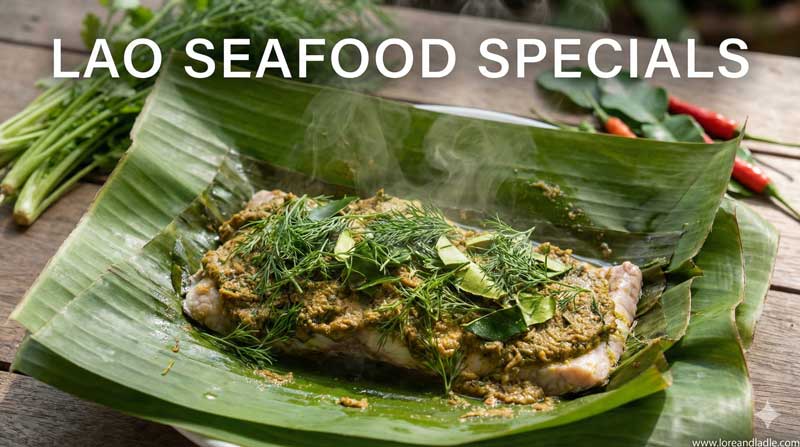
- Banana leaf and gentle steam: Some dishes use banana leaves to infuse aroma and tenderness.
- Moderate heat: Chili plays a role, but balance remains the star.
- Textures: A mix of crisp, silky, and tender textures makes each course feel lively.
These elements create a distinctive seafood profile. You taste clarity, brightness, and a sense of place in each bite. Even when you dine away from Lao waters, the flavors carry a sense of home and tradition.
Classic Lao seafood dishes you may encounter in the U.S.
- Mok Pa (steamed fish in banana leaf): A fragrant fish dish wrapped in banana leaves with dill, garlic, and herbs. The steam keeps the fish moist and lets the aromas bloom. It embodies Lao patience and respect for natural ingredients.
- Larb Pla (fish larb): Minced fish tossed with lime, fish sauce, chilies, mint, and herbs. It is bright, zesty, and highly aromatic. Larb Pla showcases how Lao cooks balance acidity, salt, and fresh greens in a single bowl.
- Tom Som Pla (fish sour soup): A lively, tangy soup with lemongrass and herbs. The sourness comes from lime and sometimes tamarind, while the fish offers clean, comforting flavor. It is restorative and celebratory at once.
- Pla Tod or grilled river fish with herbs: A crisp exterior and tender interior, finished with a hit of herbs and a dip of lime and salt. Grilled fish honors the river pantry and simple, honest seasoning.
- Seafood variants of larb and dipping sauces: Some Lao menus feature fish versions of larb, enhancing the same bright balance with seafood notes. Accompaniments like herbs, crisp vegetables, and sticky rice are common, reinforcing a communal dining experience.
These dishes illustrate how Lao seafood shines through technique and balance. Each preparation invites careful attention to aroma, texture, and the interplay of flavors.
How to enjoy Lao seafood in the United States
- Seek Lao and Isan-inspired restaurants: Look for menus that highlight Mok Pa, Larb Pla, or Tom Som Pla. These dishes signal authentic Lao seafood practice.
- Observe the herb-forward plates: Fresh herbs and lime wedges often accompany meals. They reveal the emphasis on brightness and balance.
- Expect sharing plates: Lao meals typically involve several dishes shared among diners. This approach underscores hospitality and communal enjoyment.
- Notice careful plating: Banana leaves, bright greens, and clear broths often characterize Lao seafood presentations. They reflect a respect for the ingredients and the dining ritual.
In the United States, you may find Lao seafood presented with Western accompaniments. Any dish that centers fresh fish, herbs, and a well-balanced sour-salty profile remains true to Lao culinary value. Embrace the full tasting experience: start with a herb-forward starter, move to a bright larb, and finish with a comforting soup or a grilled fish.
The craft of Lao seafood cooking at home
If you want to explore Lao seafood in your kitchen, here are simple guiding ideas:
- Use fresh fish: Choose a firm white fish or river fish if available. Freshness matters more than complexity.
- Build a bright sauce: Combine lime juice, fish sauce, and a touch of palm sugar or sugar to balance. Add minced garlic and chilies gradually.
- Light steaming or grilling: For Mok Pa, wrap seasoned fish in banana leaves and steam. For grilling, brush with a lemony herb mix before cooking.
- Chop herbs finely: Mint, dill, cilantro, and basil bring the dish to life. Add them just before serving to keep their aroma vivid.
- Pair with sticky rice: The texture and mild sweetness of sticky rice complement Lao seafood beautifully.
These steps help you connect with Lao methods and the cultural emphasis on freshness, balance, and sharing.
Sourcing and seasonality: honoring the river and the market
In Lao cuisine, the river is a pantry. When you pick seafood for Lao dishes, consider seasonal and locally sourced options. In the U.S., seafood is abundant and diverse. Choose fish that are sustainable and responsibly harvested. Local markets often have fresh river fish or well-sourced seafood that can be prepared in Lao styles. By selecting quality ingredients, you honor the culinary values of Lao cooks and the ecosystems that nourish them.
A few tips for the curious diner
- Look for the aroma of dill and lemongrass in Mok Pa. It signals the traditional use of river herbs.
- Taste the contrast: bite-size portions of tangy larb paired with crisp herbs reveal the balance Lao cuisine cherishes.
- Notice the sense of community: shared plates, multiple dishes, and a warm table echo Lao hospitality.
- Ask about preparation: a chef will often tailor the spice level and herb mix. Express your preference politely, and you may discover a personal Lao favorite.
Why these Lao seafood specials matter culturally
- They reflect a relational way of eating: meals connect people, landscapes, and flavors in a single scene.
- They honor natural ingredients: fish, herbs, and citrus are treated with respect and restraint.
- They express regional identity: Lao seafood dishes carry the river, market, and village knowledge in every bite.
- They teach balance: sour, salty, spicy, and fresh herbs come together in harmony, not at the expense of any single element.
- They invite curiosity: trying Mok Pa, Larb Pla, and Tom Som Pla opens a gateway to deeper Lao culinary storytelling.
Conclusion: the beauty and significance of Lao seafood
Best Lao Seafood Specials to Try in the U.S. This Year invites you to savor dishes that are simple in technique but rich in cultural meaning. Each bite celebrates freshness, balance, and shared meals. When you dine on Lao seafood, you participate in a living tradition that honors river life, herbs, and community. In every restaurant and home kitchen, the spirit of Lao cooking remains clear: food as a bridge between people, land, and sea. Enjoy the journey, and let these dishes guide you toward a deeper appreciation of Lao culinary craft.