
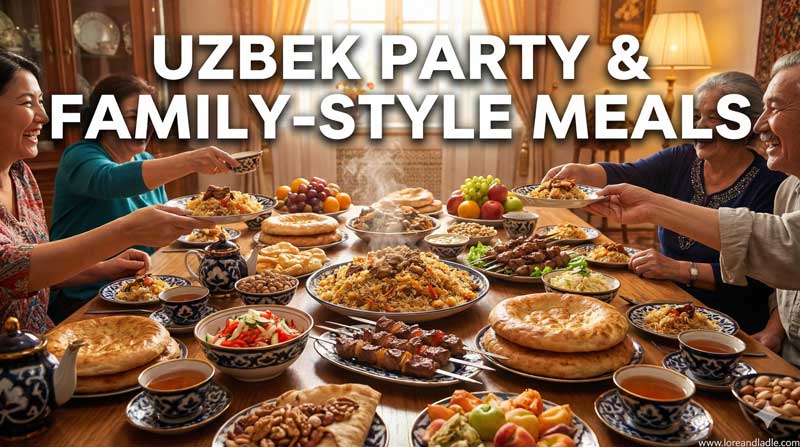
Traditional Palov – Uzbekistani Party & Family-Style Meals Flavor You’ll Love
Palov, or plov, stands as a warm invitation to Uzbek hospitality. In homes and towns, a wide pan of palov signals a moment to gather. Families bring chairs, stories, and laughter to the table as the steam rises. The familiar aroma of cumin, caramelized onions, and sweet carrots welcomes everyone. This dish embodies a living tradition: food that binds generations through sharing and care.
Core Ingredients and Craft
The foundation is simple: long-grain rice, tender meat (often mutton or beef), onions, and carrots. The cook heats oil in a large kazan, then softens onions until they glow. Meat browns next, releasing rich flavors. Carrots lend sweetness and color, soaking into the simmering pot. Cumin, sometimes a bay leaf, and salt bring warmth and depth. Water or broth brings the grains to a fluffy finish. The craft hinges on balance, timing, and respect for the ingredients.
A Social Ritual: Cooking Together
Palov is rarely a solitary affair. Families take turns watching the heat, tasting, and adjusting seasoning. Children learn by standing nearby, listening to stories as they help with small tasks. Guests arrive early to lay the table and wash greens, turning preparation into a shared ceremony. The act of cooking becomes a bridge between ages, a way to pass down memory and skill. In this way, the kitchen becomes a classroom of generosity.
Regional Echoes: Variations Across Uzbekistan
Across Uzbekistan, palov carries local character. In Samarkand, cooks might emphasize aromatic herbs and a crisp carrot sweetness. In Bukhara, onion depth often leads the flavor, with a strong, comforting base of meat. The Fergana Valley blends practicality with bright spice balance, yielding a lighter finish. Even within a city, families adjust salt, spice, and cooking time to reflect their own senses of flavor and memory. These subtle differences celebrate regional pride while keeping the core identity intact.
Palov as a Centerpiece of Celebrations
When the pan sits at the heart of a gathering, the moment becomes meaningful. Palov anchors weddings, harvest feasts, and community milestones. It invites neighbors to share bread, tea, and conversation after the meal. The dish carries memory in every serving, promising future celebrations and continued friendship. In this way, palov acts as a cultural beacon that welcomes all to the table.
The Dining Experience: Serving and Etiquette
Palov is typically presented on a long shared platter, making it easy for everyone to partake. Fresh bread and a simple salad often accompany the dish, offering balance and texture. Diners serve themselves with spoons or forks and pass the platter in a circle with courtesy. Quiet conversation and smiles accompany the first bites, underscoring the warmth of Uzbek hospitality. The serving ritual honors both the cook and the guests.
Preserving Tradition: The Art of Palov Making
Making palov is a craft that blends heat, timing, and care. The cook watches how rice absorbs liquid and how the bottom crust forms—a prized feature. The kazan, the flame, and the rhythm of stirring connect each batch to memory. Patience matters; a well-made palov reveals skill, pride, and dedication. Each pot teaches generosity and respect for food and company.
A Warm Invitation to Taste and Share
Traditional Palov offers more than flavor; it offers a welcome to community life. By honoring ingredients and hands that prepare them, the dish reflects Uzbekistani values of generosity and joy in company. Tasting palov invites you to celebrate with family, friends, and neighbors. A meal shared becomes a memory that lingers long after the last bite.