
Introduction: Best Takeout-Inspired Lao Party & Family-Style Platters to Recreate in the U.S.
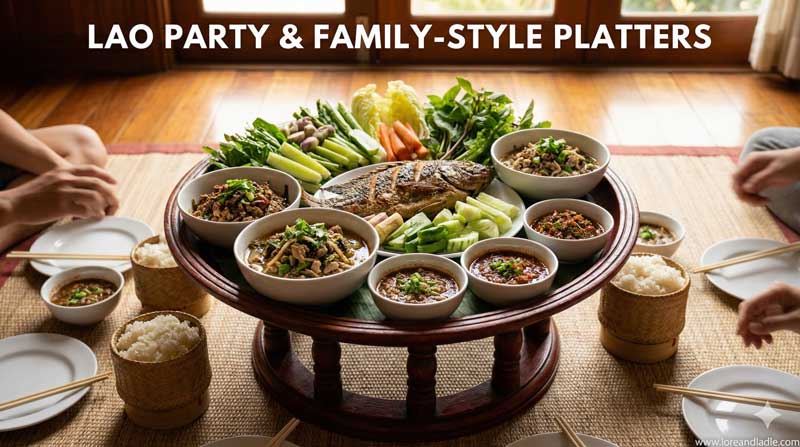
This dish concept invites you to celebrate Lao flavors through takeout-inspired party platters that you can recreate at Home in the United States. It centers on sharing, warmth, and bright contrasts in taste and texture. You will find tangible ways to honor Lao culinary traditions while adapting to modern home cooking. The goal is to honor the beauty of Lao food and its creative appeal in gatherings big and small. Expect a vibrant mix of sticky rice, fresh herbs, tangy sauces, and bold, savory bites.
What Makes Lao Party & Family-Style Platters Special
Lao cuisine shines in communal eating. Dishes arrive on generous platters, inviting guests to dip, slice, and pass together. The centerpiece is often sticky rice, shaped and shared in baskets or mounded in a rustic bowl. Flavors balance sour, salty, spicy, and earthy notes, with bright herbs adding lift. The party platter format makes space for a range of textures—from cool herbaceous salads to hot, grilled morsels. This approach celebrates hospitality and conversation as part of the dining experience.
Core Flavors and Techniques of Lao Cuisine
Key flavors include lime, fish sauce, chilies, and roasted rice powder that adds a toasty, nutty touch. Larb (laab) brings bright acidity and a clean, grassy aroma from lime juice and fresh herbs. Sticky rice provides a tender, chewy counterpoint to crisp/charred items and tangy salads. Papaya salad, or tam mak hoong, offers a crisp texture with a sour kick that wakes the palate. Fresh herbs such as mint, cilantro, and scallions brighten every bite. Dips and jeow sauces anchor the platter, offering savory depth and a choice of heat levels. Taken together, these elements create a cohesive, uplifting experience perfect for sharing.
Platter Preparation: A Feast for Sharing
Arrange the platters with harmony and variety. Place sticky rice in baskets or a wide bowl to anchor the spread. Surround it with sliced grilled meats, delicate cold cuts, and aromatic salads. Offer small bowls of jeow sauces and dipping liquids so guests can customize each bite. Layer colors and textures: green herbs, red chilies, pale white rice, and dark soy-based sauces. The arrangement invites guests to move through courses at a relaxed pace, appreciating both the visual appeal and the evolving flavors with every pass.
Recreating These Platters in a U.S. Kitchen
Start with a plan that mirrors a Lao tasting experience. Choose a protein lineup (grilled beef, chicken, or tofu for variety), a couple of salads (such as a herb-flecked larb and a papaya salad with lime), and several dips. Prepare sticky rice ahead to ensure a soft, glossy base. Cook and slice components so guests can easily pick up bites with their hands or small utensils. Finish with bright herb garnishes and a final drizzle of lime-fish sauce dressing. This approach reproduces the essence of Lao party platters while keeping the process approachable in most home kitchens.
The Cultural Value and Culinary Significance
Lao party and family-style platters embody hospitality and togetherness. Sharing a diverse array of dishes reinforces social bonds and allows guests to experience a spectrum of flavors in one setting. The emphasis on fresh herbs and contrasting textures highlights a refined sensitivity to seasonality and balance. Sticky rice as a central element conveys comfort and familiarity while inviting exploration through various toppings and sauces. In this way, the platter becomes a culinary map of Lao taste, technique, and social warmth.
Practical Tips for a Flavorful Recreation
- Build a balanced lineup: start with a bright larb, add a cool herb salad, include a sticky rice staple, and finish with a bold dipping sauce.
- Keep heat adjustable: offer both milder versions and a spicy option with sliced chilies on the side.
- Use fresh herbs generously: mint, cilantro, and scallions lift dishes and invite guests to mix and taste.
- Prepare sauces in advance: jeow-style dips deepen flavor without adding last-minute complexity.
- Plate with care: a shallow rice bowl for sticky rice, a long platter for grilled items, and small bowls for sauces help guests navigate the spread.
Ingredient Spotlight: What to Look For
- Sticky rice: the classic Lao base; it should be soft and fragrant.
- Larb-style meat: minced and seasoned with lime, fish sauce, chilies, and toasted rice powder.
- Papaya salad elements: crisp, shredded ingredients with a tangy dressing.
- Fresh herbs: mint, cilantro, and scallions for brightness.
- Jeow sauces: versatile dips that provide savory depth and a touch of heat.
Plating and Serving Etiquette
Serve with generous portions so guests can sample freely. Offer clean utensils and small dipping bowls for sauces. Provide napkins and ample water or a light tea to balance spice. The act of passing platters and helping one another creates a warm, communal dining rhythm that enhances the tasting experience.
Final Thoughts: Embracing Lao Flavors at Home
Best Takeout-Inspired Lao Party & Family-Style Platters to Recreate in the U.S. invites you to savor the artistry of Lao cooking in a home setting. The approach blends familiar takeout-inspired comfort with authentic flavor scaffolds, emphasizing sharing, balance, and hospitality. By focusing on core ingredients, textures, and the joy of gathering, you illuminate the cultural value and culinary significance of Lao cuisine in a welcoming, non-political, and culturally respectful way. Give these platters a try, and discover how Lao flavors enrich American tables with warmth, color, and aroma.